Joint ELISE-ELIAS Flagship Workshop: Setting out for AI innovation in Europe
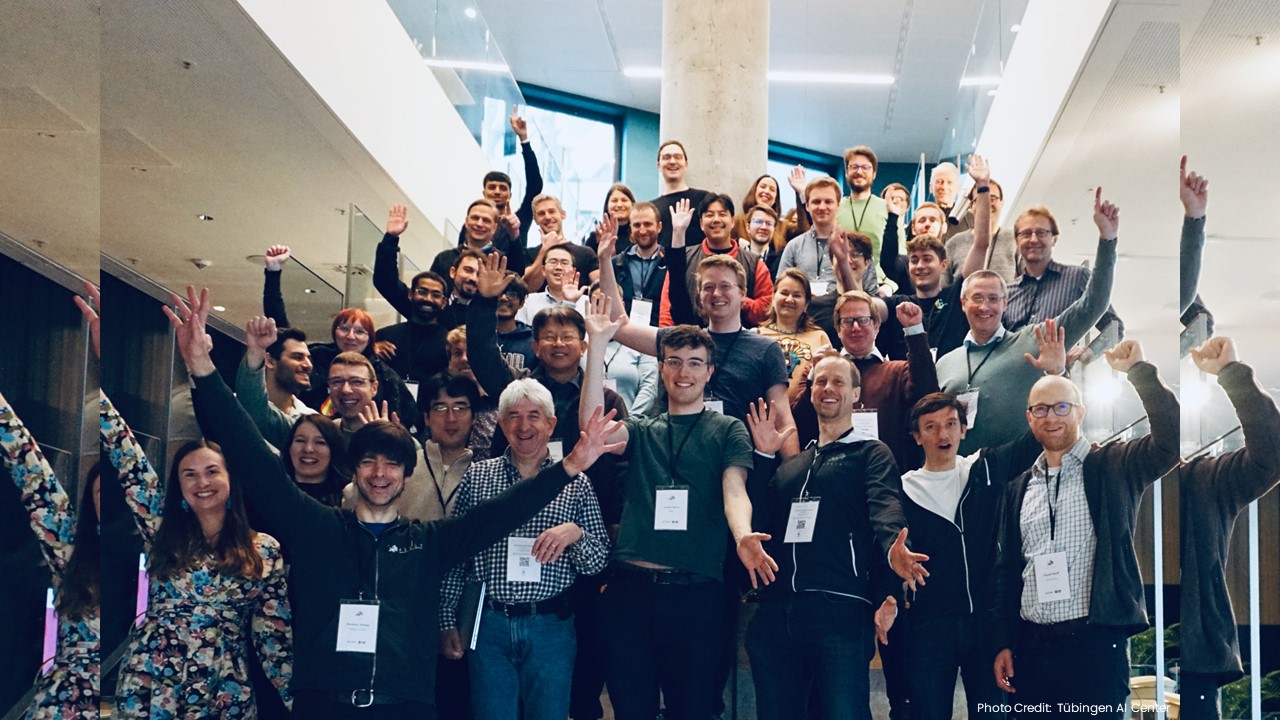
The Joint ELISE-ELIAS Flagship Workshop, held on February 7-8, 2024, in Frankfurt, Germany, served as a crucial platform for discussing the future of open-source foundation models and sciencepreneurship in Europe. It brought together leading academic researchers and industry experts to agree on a roadmap with tangible actions to build the ELIAS Innovation Alliance (EIA). A key objective of the pan-European alliance is to boost academic education and to join forces on the development of open source foundation models and startups. The workshop was co-rganised with ELISE – European Network of AI Excellence Centres, funded by the European Union’s Horizon 2020 research and innovation programme under grant agreement No 951847. Both AI Excellence Networks, ELISE and ELIAS, are closely related to the European Laboratory for Learning and Intelligent Systems (ELLIS) and committed to driving innovation and excellence in the European AI landscape.
The Future of Open-Source Foundation Models
The pursuit of enhanced generalisation capabilities in machine learning has fuelled a trend towards homogenisation and convergence, with a growing reliance on a few foundational AI systems for a broad array of applications. The first part of the workshop focused on identifying opportunities and approaches for Europe and Academia to play a significant role in shaping the Future of Open-Source Foundation Models.,
Various speakers, including Yann LeCun from Meta, Katharina Frey from the Swiss Foreign Ministry presenting the ICAIN initiative, Laura Morselli from CINECA & EuroHPC, Jenia Jitsev from LAION, Ce Zhang from Together AI, Samuel Weinbach from IPAI Aleph Alpha, and Daniel Naeff from ETH presenting Swiss AI provided diverse perspectives on leveraging open-source models to foster innovation.
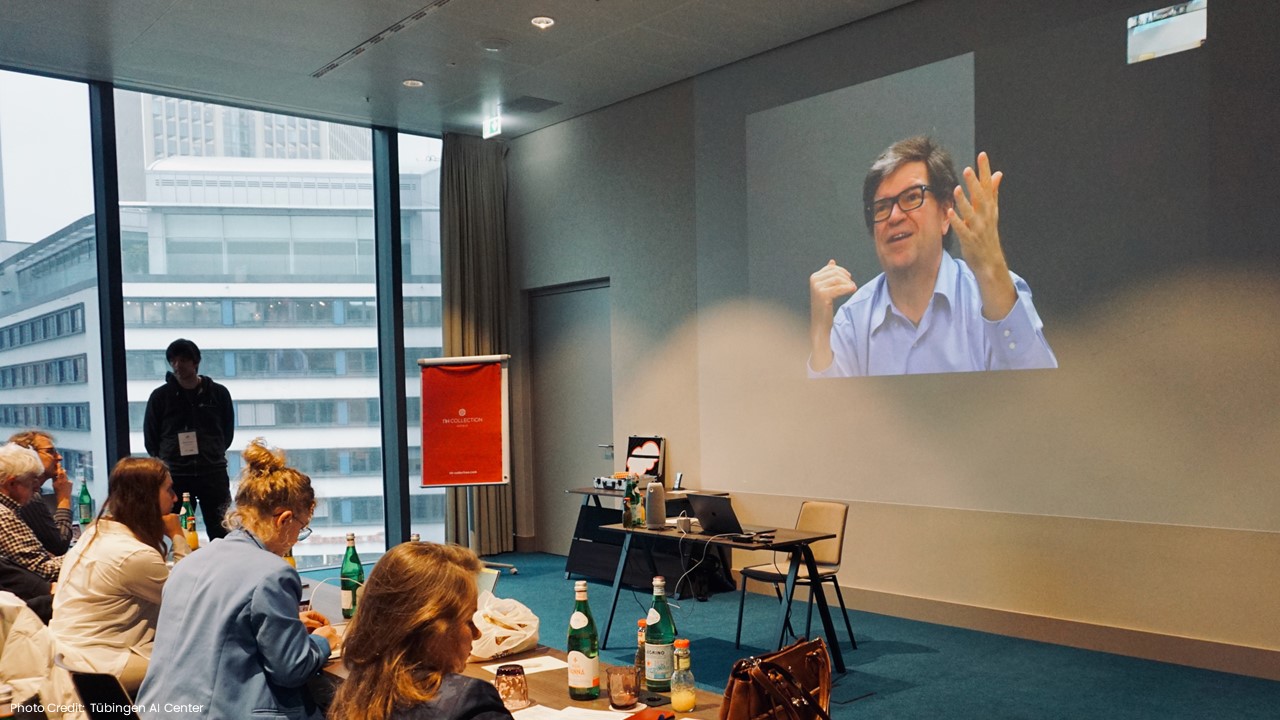
Yann Lecun (Meta)
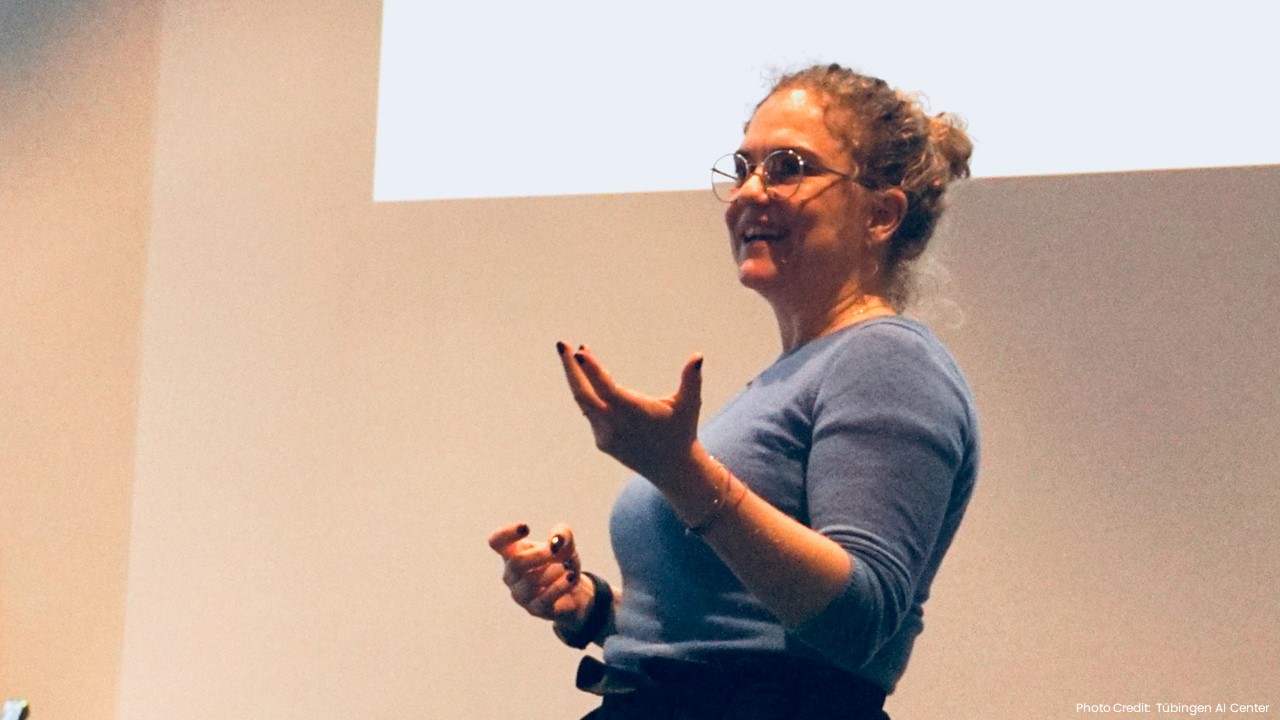
Katharina Frey (Swiss Foreign Ministry, ICAIN)
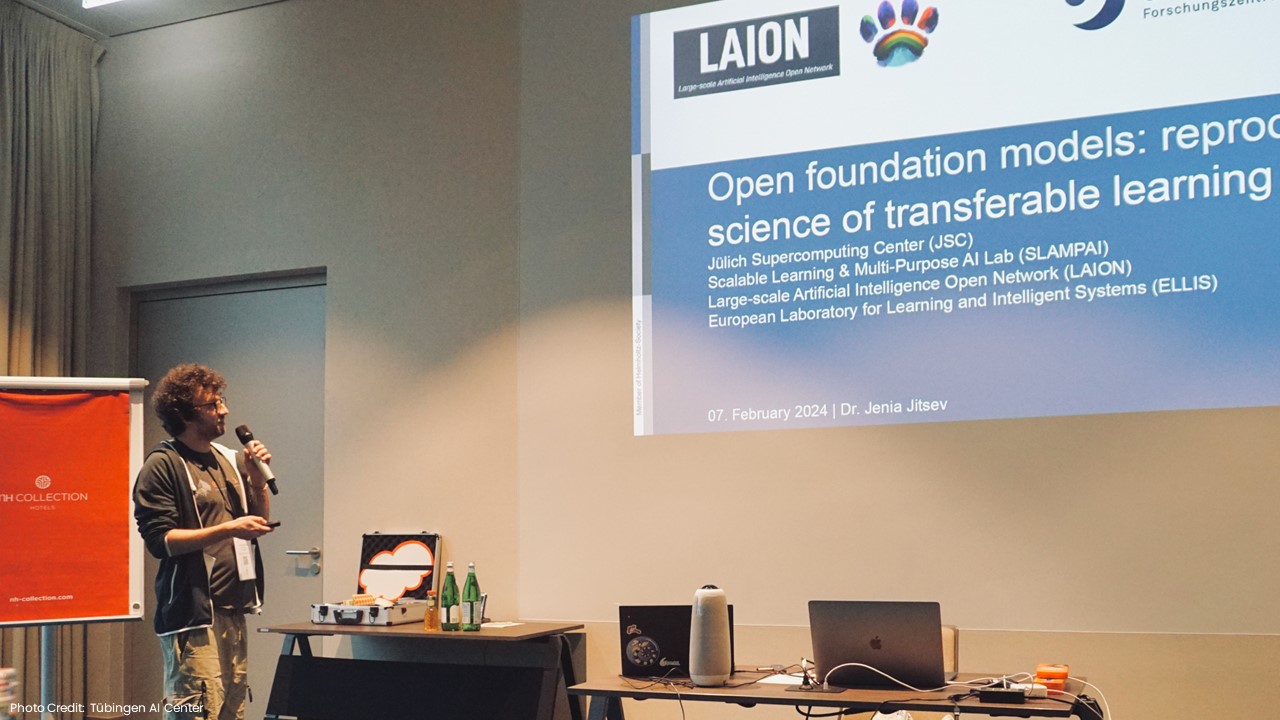
Jenia Jitsev (LAION, Jülich Supercomputing Center)
Discussions during the sessions spanned various themes from practical applications to the ethical implications of AI advancements and how to define effective roles for academia and industry to foster positive innovation for society.
Matthias Bethge, Director of the Tübingen AI Center, ELLIS Fellow, and main organiser of the workshop, highlights: (INSERT QUOTE >> ideally, give some concrete examples summarising the outcomes of the talks)
Building AI: Exploring a new role for Academia
The focus then shifted towards exploring avenues for reinventing innovation within Europe and academia. Considering the pressing demand for fundamental solutions to improve sustainability and societal well-being, Europe and academia should seize the opportunity to spearhead innovation. In the short term, initiatives will be set up to support AI professors in mentoring students towards foundational innovation and to establish an ELIAS graduate project programme. The participants also developed a vision for forming sciencepreneur units and sciencepreneur fellows within the ELLIS network, which will serve as structural enablers for change. The day finished with a short presentation of ELIAS and its initiatives to support the sciencepreneurial community at large.
Day two focused on entrepreneurship education and innovative projects. Gregor von Dulong presented best practices from building and scaling entrepreneurship education at Hasso Plattner Institute (HPI), while Isabelle Siegrist shared insights on how to set up a pan-European accelerator. As a tangible example of applying AI for sustainability, Wieland Brendel introduced Polybot, a flexible robot designed to enable sustainable agriculture with polycultures. Connecting these diverse projects is a common theme highlighting the strategic importance of fostering cross-border and cross-disciplinary collaborations in driving AI startups forward.
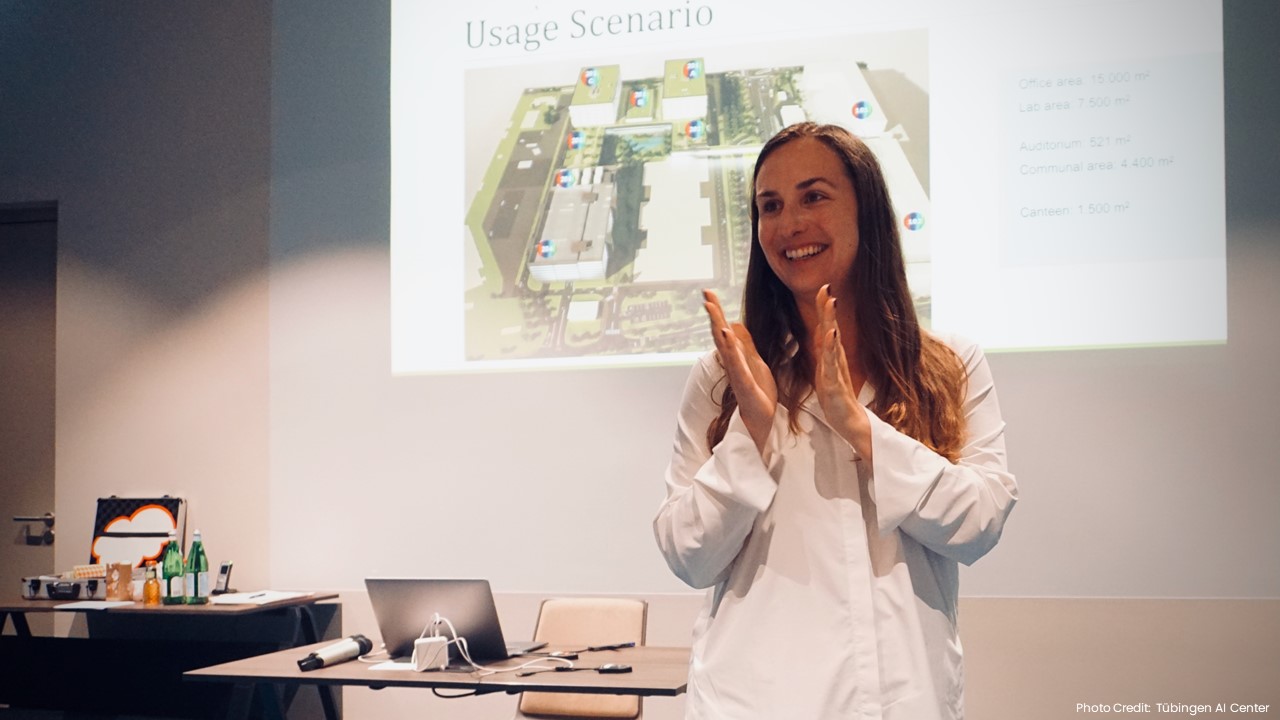
Isabelle Siegrist (ETH Zürich)
Additional spotlight presentations rounded off the program: Steffen Schneider from KI macht Schule (bringing AI to the classroom), Le Viet from La Famiglia (VCs backing EU tech ventures) and Beyza Ermis from Cohere AI (building multilingual AI through open science).
The workshop participants then split up into breakout groups, tackling key challenges and opportunities in the field of sciencepreneurship, with a focus on building the ELIAS Innovation Alliance (EIA). EIA aims to boost academic education around the open-source development of foundation models, supported by a network of incubators and startups building proprietary products around this concept. Aligned with the vision of ELLIS, it seeks to mobilise European talent in AI innovation through a network of members, fellows, and units.
Niculae Sebe, Professor at the University of Trento and Coordinator of the ELIAS project, highlighted: “This workshop was one of the initial steps towards establishing a pan-european sciencepreneurial network and bringing together leaders from academia and industry. It presented an excellent opportunity to lay the foundation for the future ELIAS Innovation Alliance.”
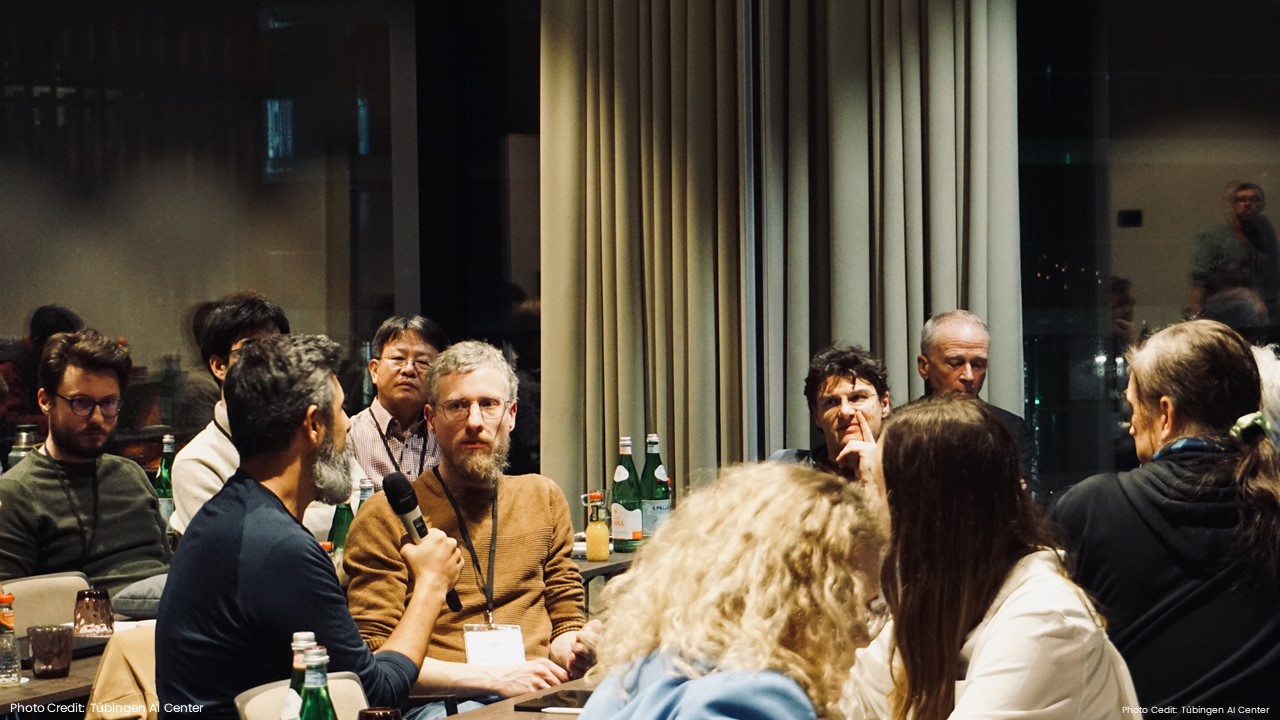
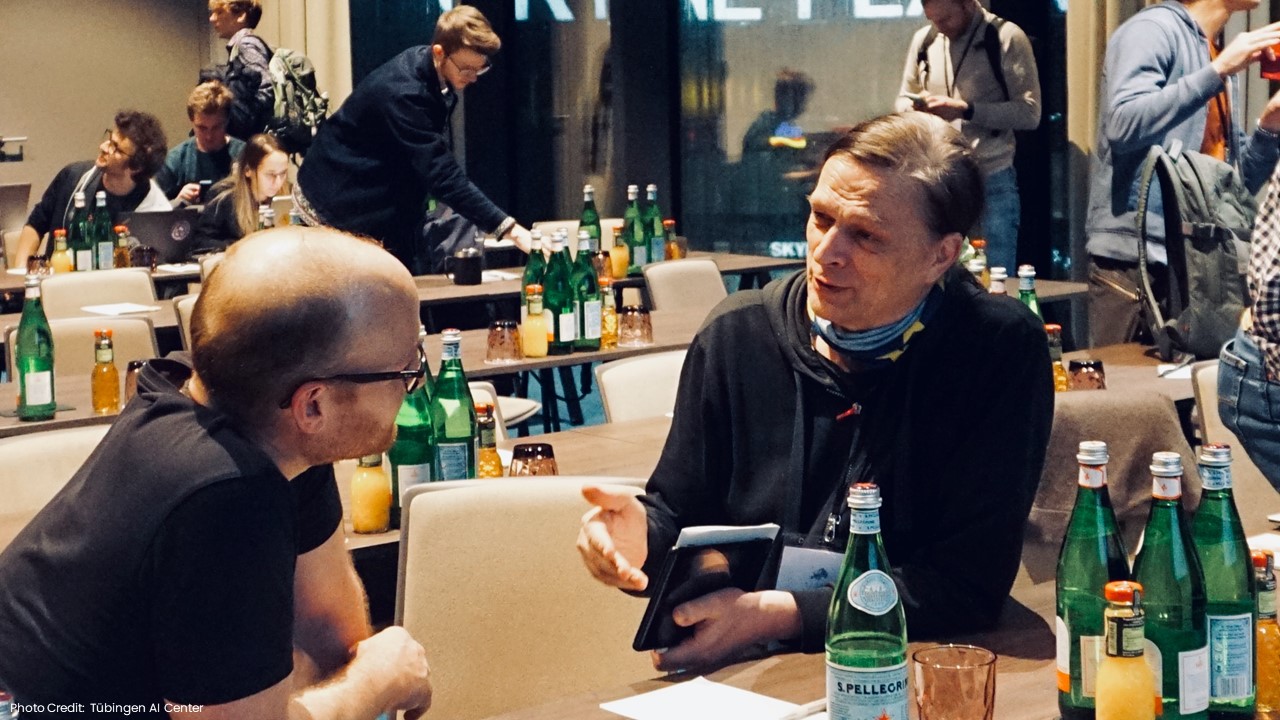
Concrete outcomes of the workshop and break-out groups include proposals for annual meetings, transformative technology summer schools, hackathons, pioneer awards, MSc graduate programs, pan-European accelerators, and calls for sciencepreneur fellows and units, all of which underscore the networks’ collective commitment to fostering innovation in Europe.